Choosing the Right Steel Structure Design Services for Long-Term Project Success
Steel is one of the most trusted materials in commercial construction. It is strong, flexible, durable, and ideal for many building types. But steel only performs well when it is designed correctly. That is why structural steel engineering plays such an important role in long-term project success.
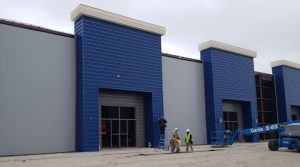
A commercial building is not only judged by how it looks on opening day. It is judged by how well it performs over time. It must carry loads safely. It must resist wind, seismic forces, vibration, and long-term use. It must also be practical to fabricate, deliver, install, inspect, and maintain.
That is where steel structure design for commercial buildings becomes critical.
The right engineering partner can help reduce waste, avoid field conflicts, support permit approval, and create a structure that works for both the owner and contractor.
The wrong design can create costly changes, delays, and long-term performance concerns.
What Is Structural Steel Engineering?
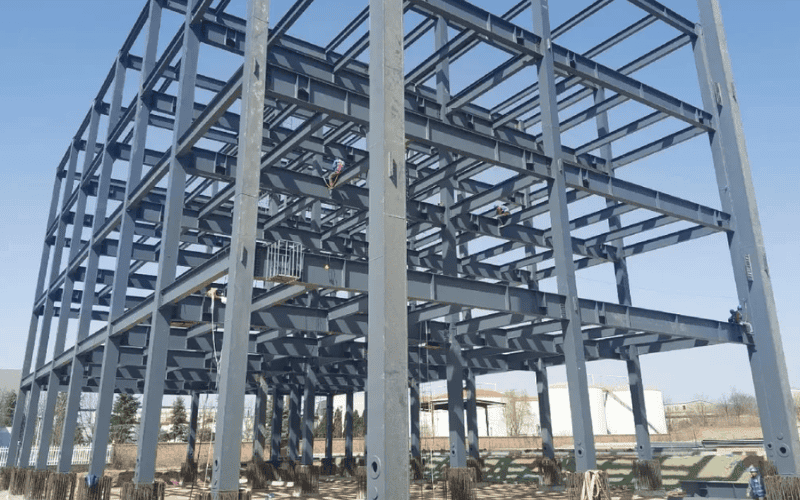
Structural steel engineering is the design and analysis of steel framing systems used to support buildings and other structures.
For commercial buildings, this may include:
- Steel beams
- Steel columns
- Moment frames
- Braced frames
- Roof framing
- Floor framing
- Steel connections
- Base plates
- Anchor bolts
- Lateral force-resisting systems
- Canopies
- Mezzanines
- Equipment platforms
- Stairs and support framing
- Rooftop equipment supports
- Structural calculations
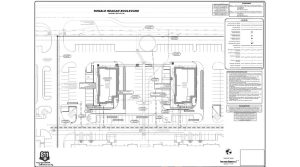
- Permit-ready drawings
The goal is to design a structure that is safe, code-compliant, efficient, and buildable.
Steel design is not just about choosing beam sizes.
It requires understanding loads, spans, connections, deflection, vibration, fire rating, lateral stability, foundation coordination, and construction sequencing.
The American Institute of Steel Construction states that ANSI/AISC 360 provides the generally applicable requirements for the design and construction of structural steel buildings and other structures. It includes both LRFD and ASD design methods. (aisc.org)
Why Steel Is Common in Commercial Buildings
Steel is widely used in commercial construction because it offers several advantages.
It can support long spans.
It can create open floor areas.
It is strong compared to its weight.
It can be fabricated off-site.
It can be erected quickly when properly coordinated.
It also works well for many project types, including:
- Office buildings
- Retail buildings
- Warehouses
- Industrial facilities
- Mixed-use buildings
- Medical offices
- Schools
- Restaurants
- Fitness centers
- Multi-story commercial buildings
- Equipment platforms
- Commercial additions
For architects, steel offers flexibility.
For owners, it can support long-term durability.
For contractors, it can speed up construction when the design is clear and coordinated.
But these benefits depend on good engineering.
Why Steel Structure Design Matters
A steel frame must do more than stand up.
It must perform under real conditions.
That includes:
- Dead loads
- Live loads
- Roof loads
- Wind loads
- Seismic loads
- Snow loads, where applicable
- Equipment loads
- Vibration effects
- Deflection limits
- Connection forces
- Foundation reactions
If the steel is under-designed, the structure may be unsafe.
If the steel is over-designed, the owner may pay more than needed.
A good engineer finds the right balance.
That is why many owners look for a Cost effective steel structure design services provider.
Cost-effective does not mean cheap.
It means smart.
It means the design uses the right members, the right connections, and the right structural system for the building.
Steel Structure Design for Commercial Buildings
Steel structure design for commercial buildings is different from small residential framing.
Commercial buildings often have larger spans, higher loads, public safety requirements, heavier equipment, and stricter permit review.
A commercial steel design must coordinate with:
- Architectural layouts
- MEP systems
- Civil site conditions
- Foundation design
- Fire protection needs
- Roof drainage
- Rooftop mechanical units
- Building envelope systems
- Construction schedule
- Fabrication requirements
- Local building code requirements
For example, an architect may want a large open lobby.
That may require longer steel beams or transfer framing.
An MEP team may need ceiling space for ducts and piping.
That may affect beam depth and framing layout.
A rooftop HVAC unit may need additional steel support.
A warehouse may need clear-height requirements that affect column spacing and roof framing.
Steel design is a team effort.
The structural engineer must understand how the building will be used, built, and maintained.
Code Compliance in Structural Steel Design
Steel structures must meet building code requirements.
In many U.S. jurisdictions, structural steel design is based on the adopted building code and referenced standards.
The 2024 International Building Code incorporates ANSI/AISC 360-22 and ANSI/AISC 341-22 by reference for structural steel design and construction requirements. It also incorporates these standards in Chapter 17 for inspection requirements. (aisc.org)
This matters because commercial projects must pass permit review.
A structural steel engineer must understand:
- Applicable building code
- Local amendments
- Risk category
- Occupancy type
- Wind design criteria
- Seismic design criteria
- Snow loads, where applicable
- Special inspection requirements
- Fire-resistance requirements
- Structural steel standards
The AISC 16th Edition Steel Construction Manual is also a key reference for steel design. AISC describes the manual as containing 2,432 pages of structural steel design information. (aisc.org)
For owners and architects, this means one thing:
The steel design team must know the current standards and the local permit process.
Cost-Effective Steel Design Does Not Mean Cutting Corners
Many clients want a cost-effective steel design.
That is reasonable.
Steel can be a major part of the construction budget.
But cutting corners in structural design is dangerous and often expensive later.
A true Cost effective steel structure design services provider helps reduce cost through better decisions, not weaker design.
Cost-effective steel design may include:
- Efficient column spacing
- Practical beam sizes
- Clean load paths
- Simple connections
- Reduced field welding
- Repetitive framing where possible
- Early coordination with fabricators
- Avoiding unnecessary steel weight
- Designing for constructability
- Coordinating openings and penetrations
- Matching the structural system to the building use
Sometimes a slightly heavier beam can reduce connection complexity.
Sometimes a different column grid can reduce total steel tonnage.
Sometimes early MEP coordination can avoid expensive beam penetrations.
A good engineer knows where money is saved.
And where it should not be saved.
The Role of Connections in Steel Design
Steel connections are one of the most important parts of a steel structure.
Connections transfer forces between beams, columns, braces, and foundations.
They can also affect fabrication cost, erection time, and inspection requirements.
Common connection types may include:
- Shear connections
- Moment connections
- Braced-frame connections
- Base plate connections
- Splice connections
- Clip angles
- End plates
- Bolted connections
- Welded connections
Connection design must be coordinated carefully.
A member may be strong enough on paper, but the connection must also work.
Poor connection planning can lead to fabrication delays and field problems.
A professional steel design team understands both analysis and construction.
That is what separates practical engineering from basic calculations.
Steel Design and Constructability
A good steel design should be buildable.
This sounds simple, but it is one of the biggest differences between average design and strong design.
Constructability means the steel can be fabricated, delivered, lifted, connected, inspected, and coordinated with other trades.
A constructible steel design considers:
- Standard member sizes
- Shop fabrication needs
- Crane access
- Erection sequence
- Bolt access
- Weld access
- Field tolerances
- Connection simplicity
- Coordination with joists and decking
- Coordination with stairs, elevators, and shafts
- MEP penetrations
- Fireproofing and coatings
A design that looks efficient in software may not be efficient in the field.
That is why experience matters.
The best structural steel engineering teams think beyond the calculation model.
They think about the job site.
Long-Term Performance Matters
Steel buildings must perform for many years.
Long-term performance depends on more than strength.
It also depends on:
- Deflection control
- Vibration control
- Corrosion protection
- Proper drainage coordination
- Fire protection
- Lateral stability
- Foundation coordination
- Maintenance access
- Future expansion planning
For example, a floor may be strong enough but still feel bouncy if vibration is not considered.
A roof may support normal loads but need added framing for future mechanical equipment.
Exterior steel may need corrosion protection.
A warehouse may need future flexibility for racking or equipment.
A smart design looks at how the building will be used over time.
That is why Professional steel structure design services for buildings should include practical questions about the owner’s long-term plans.
Steel Design for Additions and Renovations
Steel is often used in commercial additions and renovations.
These projects can be more complex than new construction.
The engineer must understand the existing structure.
That may require:
- Reviewing existing drawings
- Field observation
- Measuring existing members
- Checking existing foundations
- Reviewing load paths
- Evaluating new openings
- Designing new steel beams or columns
- Supporting rooftop equipment
- Strengthening existing framing
- Coordinating temporary shoring, when needed
Renovation work carries more unknowns.
Existing conditions may not match old drawings.
Previous work may not have been documented.
Hidden structural issues may appear during construction.
That is why a careful engineering review is important.
For commercial renovation projects, steel design must protect both the existing building and the new scope.
Steel Structure Design for Rooftop Equipment
Many commercial buildings need rooftop mechanical equipment.
This may include:
- RTUs
- Exhaust fans
- Make-up air units
- Cooling units
- Solar equipment
- Mechanical screens
- Roof access supports
These systems add weight to the roof.
They may also add vibration, wind loads, and concentrated reactions.
A structural engineer must check whether the existing or proposed roof framing can support the equipment.
If not, supplemental steel may be needed.
This is a common reason clients need structural steel engineering support.
It is especially important for commercial retrofits, tenant improvements, restaurants, warehouses, and medical offices.
What Should a Steel Structure Design Package Include?
A steel structure design package may include:
- Structural plans
- Framing plans
- Column layouts
- Beam sizes
- Brace locations
- Connection notes
- Base plate and anchor bolt details
- Foundation reactions
- Roof framing plans
- Floor framing plans
- Steel details
- Structural calculations
- General structural notes
- Code criteria
- Special inspection notes
- Coordination details
The exact package depends on the project.
A new commercial building may need a full structural set.
A rooftop equipment support project may need a focused steel support plan.
A tenant improvement may need steel lintels, headers, or framing around openings.
A mezzanine may need full framing, connection, and foundation coordination.
The scope must be clear from the beginning.
How to Choose the Right Steel Structure Design Services
Choosing the right steel design team is a major project decision.
Here are the most important things to look for.
1. Commercial Steel Experience
The firm should understand commercial building types.
Commercial steel design requires more coordination than small residential work.
Look for experience with offices, retail buildings, warehouses, tenant improvements, additions, and industrial spaces.
2. Code Knowledge
The engineer should understand the adopted building code, AISC standards, wind loads, seismic requirements, and local permit expectations.
AISC released ANSI/AISC 360-22 as the newer version of its structural steel building specification, replacing ANSI/AISC 360-16. (aisc.org)
3. Practical Design Approach
The design should be safe and efficient.
It should also be buildable.
Ask whether the engineer considers fabrication, erection, connection simplicity, and coordination with other trades.
4. Clear Scope of Work
A good proposal should clearly state what is included.
For example:
- Structural design
- Steel framing plans
- Structural calculations
- Connection design assumptions
- Foundation coordination
- Permit response support
- Site visits, if included
- Construction administration, if included
This prevents confusion later.
5. Coordination With Other Disciplines
Steel design must coordinate with architecture, MEP, civil, and sometimes fire protection.
Choose a team that communicates well.
6. Fast Response Time
Commercial projects often move quickly.
Delayed engineering responses can delay permits, fabrication, and construction.
7. Long-Term Thinking
A good steel design partner should ask about future use.
Will the owner add rooftop units later?
Will the tenant change?
Will the warehouse need heavier loads?
Will expansion be needed?
These questions can affect the design.
Questions to Ask Before Hiring a Steel Design Firm
Before selecting a Professional steel structure design services for buildings provider, ask these questions:
- Have you designed similar commercial steel projects?
- What building codes and standards will you use?
- Will you provide structural calculations?
- Will your drawings be permit-ready?
- Do you coordinate with the architect and MEP team?
- Do you support plan review comments?
- Do you consider fabrication and constructability?
- Are site visits included?
- Are connection designs included or delegated?
- What information do you need from us before starting?
These questions help avoid misunderstandings.
They also help define the real value of the engineering service.
Common Mistakes in Steel Structure Design
Commercial steel projects can run into problems when design is rushed or poorly coordinated.
Common mistakes include:
1. Poor Load Path Planning
Every load must travel safely to the foundation.
If the load path is unclear, the design may create weak points or field issues.
2. Ignoring MEP Coordination
Ducts, pipes, conduits, and equipment often need space around steel framing.
If this is not coordinated early, conflicts can happen in the field.
3. Overcomplicated Connections
Complex connections can increase fabrication cost and delay erection.
Simple, repeatable connections often improve project efficiency.
4. Underestimating Rooftop Equipment Loads
Rooftop units can add significant loads.
Existing roof framing must be checked before equipment is installed.
5. Not Planning for Deflection
A beam may be strong enough but still deflect too much.
Deflection can affect walls, ceilings, finishes, doors, windows, and comfort.
6. Weak Permit Documentation
Incomplete drawings and calculations can lead to plan review comments.
That can delay approval.
7. Choosing Only by Lowest Fee
The lowest engineering fee may not create the lowest project cost.
A poor design can create change orders, delays, and redesign costs.
How GDI Engineering Supports Steel Structure Design
GDI Engineering provides structural engineering support for commercial, residential, and light industrial projects.
Our structural team can help with:
- Structural steel engineering
- Commercial steel framing design
- Steel beam and column design
- Rooftop equipment support design
- Steel support for openings
- Commercial additions and renovations
- Foundation coordination
- Structural calculations
- Permit-ready drawings
- Plan review response support
- Coordination with MEP, civil, and architectural teams
We focus on practical engineering.
That means the design must be safe, clear, code-aware, and buildable.
Our goal is to support owners, architects, developers, and contractors with steel design solutions that work in the real world.
Final Thoughts
Steel can be one of the best structural systems for commercial buildings.
It offers strength, flexibility, speed, and long-term value.
But the success of a steel building depends on the quality of the design.
Good structural steel engineering helps reduce risk, improve constructability, support permit approval, and control long-term costs.
If you need steel structure design for commercial buildings, choose a team that understands code requirements, commercial construction, fabrication realities, and project coordination.
The right Cost effective steel structure design services provider will not simply make the steel lighter.
They will make the design smarter.
And a strong Professional steel structure design services for buildings partner will help your project move from concept to construction with fewer surprises.
For long-term project success, steel design should never be treated as a late-stage task.
It should be part of the strategy from the beginning.