How Smart MEP Design Improves Building Efficiency and Reduces Long-Term Costs
When owners, architects, and contractors think about a successful building, they often focus on layout, structure, finishes, and cost. But behind every comfortable, safe, and efficient building is strong mep design and engineering. Mechanical, electrical, and plumbing systems control how a building breathes, uses power, manages water, protects occupants, and performs every day. That is why many owners search for Affordable MEP design engineering firms near me when they want a project that is not only permit-ready, but also efficient for the long term.
MEP systems are not small details. They shape the life of the building.
Heating, cooling, ventilation, lighting, power, water supply, and drainage all affect operating costs. They also affect comfort, safety, code compliance, maintenance, and future upgrades.
Buildings use a major share of energy in the United States. The U.S. Department of Energy states that homes and commercial buildings consume about 40% of the energy used in the country. That makes building efficiency one of the most important cost-control areas for owners and developers. (The Department of Energy’s Energy.gov)
Smart MEP design helps reduce waste before it becomes expensive.
It does this by planning systems correctly from the beginning.
What Is MEP Design and Engineering?
MEP stands for Mechanical, Electrical, and Plumbing.
These three systems support the daily function of a building.
Mechanical Design
Mechanical design usually includes:
- HVAC systems
- Heating and cooling loads
- Ventilation
- Exhaust systems
- Duct layout
- Equipment sizing
- Indoor air quality planning
- Energy efficiency coordination
The mechanical system affects comfort, energy use, and air quality.
If the HVAC system is too large, it can waste energy. If it is too small, the space may not stay comfortable. If ventilation is poor, the building may feel stale or unhealthy.
Electrical Design
Electrical design usually includes:
- Power distribution
- Lighting design
- Panel schedules
- Load calculations
- Emergency power
- Low-voltage coordination
- Fire alarm coordination when included
- Code-compliant electrical layouts
Electrical design affects safety, lighting quality, energy use, and future flexibility.
A poor electrical layout can lead to overloaded panels, costly changes, and failed inspections.
Plumbing Design
Plumbing design usually includes:
- Domestic water systems
- Sanitary drainage
- Venting
- Gas piping when required
- Fixture layouts
- Water heater sizing
- Storm drainage when included
- Code coordination
Plumbing design affects health, sanitation, water efficiency, and long-term maintenance.
A small mistake in plumbing design can create major problems later.
Leaks, poor drainage, low water pressure, and inspection issues can all delay a project.
Why Are MEP Services Important in Construction?
Many clients ask: Why are MEP services important in construction?
The simple answer is this:
MEP services make the building work.
A beautiful building with poor MEP design can become expensive, uncomfortable, and hard to maintain. A smart MEP design supports the architect’s vision while making sure the building performs properly.
MEP services are important because they help with:
- Permit approval
- Code compliance
- Energy performance
- Comfort
- Safety
- Utility coordination
- Construction clarity
- Long-term cost control
- Maintenance access
- Equipment planning
MEP engineers also help avoid conflicts before construction starts.
For example, ductwork may conflict with structural beams. Plumbing lines may need space in walls or ceilings. Electrical panels may need clearance. HVAC equipment may need roof support or access.
When these items are not planned early, the project can face change orders.
That means more cost, more delay, and more stress.
How Does MEP Design Improve Building Efficiency?
Another common question is: How does MEP design improve building efficiency?
MEP design improves building efficiency by matching systems to the real needs of the space.
It is not just about choosing expensive equipment. It is about designing the right system for the building.
A smart MEP engineer looks at:
- Building size
- Occupancy
- Use of each room
- Local climate
- Insulation and envelope
- Window areas
- Equipment loads
- Lighting needs
- Ventilation requirements
- Operating schedule
- Future expansion needs
The goal is simple.
Use only what the building needs.
Not too much. Not too little.
That balance can reduce energy use and lower operating costs.
According to the U.S. Energy Information Administration, space heating, ventilation, and lighting are major energy uses in commercial buildings. Space heating alone accounted for about 32% of commercial building energy use in 2018. (U.S. Energy Information Administration)
This is why MEP design has such a strong impact.
When HVAC, lighting, controls, and plumbing systems are designed well, the building can operate more efficiently every day.
The Cost of Poor MEP Design
Poor MEP design can look cheaper at first.
But it often costs more later.
Here are common problems caused by weak MEP planning:
1. Oversized HVAC Equipment
Oversized HVAC systems cost more to buy and install.
They may also cycle on and off too often. This can reduce comfort and increase wear on equipment.
2. Undersized HVAC Equipment
Undersized systems may not heat or cool the space properly.
This can lead to tenant complaints, poor indoor comfort, and expensive corrections.
3. Poor Duct or Pipe Routing
Bad routing can create field conflicts.
Contractors may need to reroute systems during construction. This can cause delays and change orders.
4. Weak Electrical Load Planning
If electrical loads are not calculated correctly, panels may be too small.
This can create safety issues and future upgrade costs.
5. Poor Lighting Design
Bad lighting design can waste energy.
It can also make a space uncomfortable or less useful for occupants.
6. Incomplete Plumbing Coordination
Plumbing systems need proper slope, venting, and access.
Poor coordination can lead to leaks, clogs, odors, and failed inspections.
7. Failed Permit Reviews
Many cities and counties review MEP drawings closely.
Incomplete or unclear drawings can lead to plan check comments. This delays the permit process.
A strong MEP team helps reduce these issues before they reach the field.
Smart MEP Design Starts Early
MEP design should not be an afterthought.
The best results happen when MEP engineers are involved early.
Early coordination helps the project team make better decisions.
For example, the architect may need ceiling space for ducts. The structural engineer may need to support rooftop units. The electrical engineer may need room for panels and equipment. The plumbing engineer may need space for chases and drains.
If these items are planned late, the team may need to redesign parts of the project.
That costs time and money.
Early MEP coordination also helps owners understand future operating costs.
A system that saves money during construction may cost more over 10 years. A slightly better system may reduce energy use and maintenance.
That is the value of smart MEP design.
It looks beyond the first cost.
It considers the full life of the building.
How MEP Design Reduces Long-Term Costs
Long-term costs are often higher than design and construction costs.
Energy, maintenance, repairs, replacements, and downtime all add up.
Smart MEP design helps reduce those costs in several ways.
Better Equipment Sizing
Correctly sized equipment usually performs better.
It can reduce waste, improve comfort, and extend equipment life.
Efficient HVAC Design
HVAC is one of the largest energy users in many buildings.
The Whole Building Design Guide notes that HVAC and refrigeration systems represent more than 50% of commercial building electricity use. (WBDG)
This makes HVAC design a major cost-saving opportunity.
Efficient HVAC design may include:
- Proper load calculations
- Efficient equipment selection
- Variable-speed systems
- Demand-based ventilation
- Heat recovery
- Better zoning
- Smart controls
- Proper duct sizing
These design decisions can reduce energy waste.
Efficient Lighting Design
Lighting affects both energy use and comfort.
Good lighting design uses the right fixtures, layout, controls, and light levels.
LED lighting, daylight sensors, occupancy sensors, and proper switching can all help reduce waste.
Water-Efficient Plumbing
Plumbing design can also reduce long-term costs.
Low-flow fixtures, proper water heater sizing, and efficient pipe layouts can reduce water and energy waste.
Easier Maintenance
Good MEP design also considers access.
Can maintenance staff reach filters, valves, panels, pumps, and equipment?
If not, maintenance becomes slower and more expensive.
Smart design makes future service easier.
That saves money over time.
MEP Design Helps Improve Comfort
Efficiency is not only about cost.
It is also about comfort.
A building may have low utility bills, but if people are uncomfortable, the design has failed.
Good MEP design supports:
- Stable indoor temperatures
- Proper ventilation
- Good air distribution
- Quiet HVAC operation
- Balanced humidity
- Reliable hot water
- Good lighting levels
- Safe electrical systems
Comfort matters in every project type.
In offices, it affects productivity.
In retail, it affects customer experience.
In restaurants, it affects both customers and staff.
In apartments, it affects tenant satisfaction.
In medical or lab spaces, it may affect health and operations.
That is why MEP design must balance efficiency with real human use.
MEP Design Supports Code Compliance and Permitting
MEP drawings are often required for permit approval.
Cities and counties want to know that the building systems are safe and code-compliant.
A proper MEP design package can include:
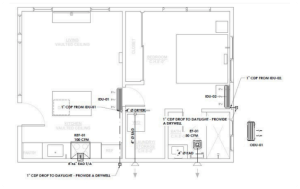
- Mechanical plans
- Electrical plans
- Plumbing plans
- Load calculations
- Panel schedules
- Equipment schedules
- Lighting plans
- Fixture schedules
- Energy compliance documents when required
- Coordination notes
Permit reviewers may check ventilation, equipment sizing, electrical load, fixture counts, accessibility, energy code compliance, and safety clearances.
When drawings are clear, the review process can move faster.
When drawings are incomplete, the project may receive comments.
Those comments can delay construction.
A qualified MEP design engineering team helps reduce that risk.
MEP Coordination Helps Avoid Construction Delays
Construction delays are expensive.
One major cause of delays is poor coordination between systems.
MEP systems must fit within the building.
They must also work with architectural and structural plans.
Common coordination issues include:
- Ducts crossing beams
- Pipes blocking ceiling space
- Panels placed without required clearance
- Rooftop units without structural support
- Plumbing fixtures not matching architectural plans
- Exhaust systems missing proper routing
- Equipment rooms too small
- Electrical loads not matching equipment needs
These issues are easier to solve on paper.
They are much harder to solve in the field.
That is why MEP coordination should happen before construction starts.
Good coordination reduces surprises.
It also helps contractors price the work more accurately.
Affordable MEP Design Engineering Firms Near Me: What to Look For
Many owners and architects search online for Affordable MEP design engineering firms near me.
Affordability matters.
But the lowest price is not always the best value.
A good MEP firm should offer fair pricing and reliable design quality.
When choosing an MEP design firm, look for:
- Experience with your project type
- Knowledge of local codes
- Clear scope of work
- Permit-ready drawings
- Fast communication
- Coordination with architects and contractors
- Transparent timelines
- Practical design solutions
- Support during plan review
- Ability to handle revisions
The right firm should not only prepare drawings.
It should help you avoid problems.
That is where real savings happen.
A cheap design that causes delays can become expensive quickly.
A smart design can save money during construction and operation.
MEP Design for Different Project Types
MEP design is not one-size-fits-all.
Each project type has different needs.
Commercial Buildings
Commercial projects often need careful HVAC zoning, lighting design, power planning, and code coordination.
Tenant comfort and operating cost are major concerns.
Restaurants
Restaurants require special attention to kitchen ventilation, grease waste, gas, electrical loads, and plumbing fixtures.
Poor coordination can create serious inspection issues.
Medical and Healthcare Spaces
Healthcare spaces may need special ventilation, backup power, plumbing requirements, and strict code coordination.
Comfort, safety, and reliability are critical.
Multi-Family Buildings
Multi-family projects need efficient systems that are easy to maintain.
MEP design must also consider metering, equipment locations, plumbing stacks, and tenant comfort.
Retail Spaces
Retail spaces need flexible lighting, HVAC comfort, power for equipment, and clean layouts.
Fast permitting is often important.
Industrial and Warehouse Spaces
Industrial projects may need higher electrical capacity, ventilation, compressed air coordination, process loads, or special equipment support.
The MEP design must match the real operation of the space.
Smart MEP Design and Building Efficiency
Building efficiency is not created by one system.
It comes from the way all systems work together.
The mechanical system affects energy use.
The electrical system affects lighting, power, and controls.
The plumbing system affects water and energy use.
The building envelope also affects HVAC loads.
For example, better insulation and windows may reduce heating and cooling demand. That can allow smaller HVAC equipment.
The Whole Building Design Guide notes that an efficient building envelope can reduce energy and operating costs and may also reduce the size and cost of the HVAC system needed. (WBDG)
This is why smart MEP design should be coordinated with the full building design.
It is not just engineering in isolation.
It is part of the whole project strategy.
MEP Design Helps Owners Think Beyond First Cost
Many project decisions are based on first cost.
That is understandable.
Budgets matter.
But owners should also look at long-term costs.
A cheaper system may cost more in energy, repairs, and replacement.
A better-designed system may reduce monthly expenses.
ENERGY STAR notes that certified commercial buildings can have lower operating costs and higher asset value. (ENERGY STAR)
This does not mean every project needs the most expensive equipment.
It means each project needs smart choices.
Good MEP design helps owners compare options.
It can help answer questions like:
- Is this equipment worth the added cost?
- Will this system reduce energy use?
- Can maintenance staff service it easily?
- Will this support future expansion?
- Will this pass permit review?
- Will this create construction conflicts?
These questions protect the owner from costly surprises.
Common Signs You Need MEP Engineering Support
You may need MEP design and engineering support if:
- You are submitting for permit
- Your architect needs engineering drawings
- Your building use is changing
- You are adding HVAC equipment
- You are renovating a commercial space
- You received city comments
- You need electrical load calculations
- You need plumbing plans
- You are adding kitchen equipment
- You are changing occupancy
- You need energy compliance support
- Your contractor needs coordinated drawings
It is better to involve MEP engineers before problems appear.
Waiting until permit review or construction can create delays.
How GDI Engineering Supports MEP Design
GDI Engineering provides MEP design and engineering support for residential, commercial, and light industrial projects.
Our team helps architects, owners, developers, and contractors prepare clear, coordinated, and permit-ready engineering drawings.
Our MEP services may include:
- Mechanical design
- Electrical design
- Plumbing design
- HVAC layouts
- Load calculations
- Lighting and power plans
- Panel schedules
- Plumbing fixture layouts
- Ventilation design
- Equipment coordination
- Permit support
- Plan review response support
- Coordination with architectural and structural drawings
We focus on practical design.
That means the drawings must work for the permit office, the contractor, and the owner.
A good design should not only look correct.
It should be buildable.
It should also support long-term operation.
Why Smart MEP Design Is Worth It
Smart MEP design improves the project in many ways.
It can reduce operating costs.
It can support faster permitting.
It can reduce construction conflicts.
It can improve comfort.
It can make maintenance easier.
It can help the building perform better for years.
MEP systems are hidden behind walls, ceilings, panels, and equipment rooms. But they affect almost everything inside the building.
That is why MEP design should never be treated as a last-minute task.
It should be part of the project strategy from the beginning.
When MEP systems are designed well, the building becomes more efficient, more comfortable, and easier to operate.
That is the real value of smart engineering.
Final Thoughts
Smart MEP design is one of the best ways to improve building efficiency and reduce long-term costs.
It helps owners avoid waste, contractors avoid field conflicts, and architects deliver better projects.
It also helps buildings meet code, pass inspections, and perform better after construction.
So, when asking How does MEP design improve building efficiency, the answer is clear.
It improves efficiency by designing the right systems, in the right way, for the real needs of the building.
And when asking Why are MEP services important in construction, the answer is just as clear.
MEP services turn a building from a shell into a working, comfortable, safe, and efficient space.
For owners, architects, and contractors looking for mep design and engineering, choosing the right engineering partner can make the difference between a costly project and a well-planned one.
GDI Engineering is ready to support your next project with practical, coordinated, and permit-ready MEP design solutions.