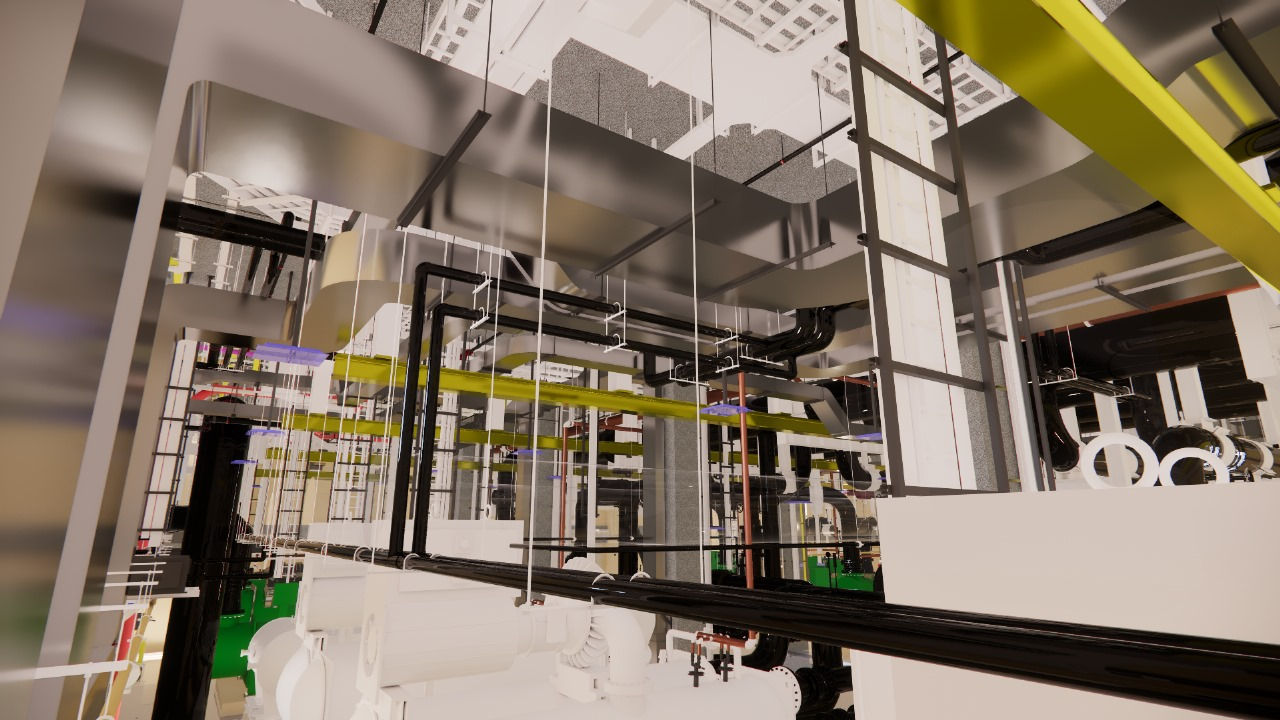
MEP Coordination in BIM: How Engineers Avoid Costly Clashes
Introduction
Construction projects today are more complex than ever. Buildings include dense networks of mechanical, electrical, and plumbing systems that must fit within tight architectural and structural spaces.
Without proper coordination, these systems often collide with each other. A duct may pass through a beam. A cable tray may intersect a pipe. When these issues appear during construction, they can cause delays, redesigns, and significant cost overruns.
This is why BIM MEP coordination has become essential in modern construction.
Building Information Modeling (BIM) allows architects, engineers, and contractors to coordinate systems digitally before construction begins. Through MEP clash detection, teams identify conflicts early and resolve them before they reach the job site.
For architects, developers, contractors, property owners, investors, and builders, BIM coordination is not just a technical tool. It is a strategic approach that reduces risk, improves collaboration, and protects project budgets.
In this article, we will explore how the MEP coordination process in BIM works and how engineering teams use it to avoid costly construction clashes.
What is BIM MEP Coordination?
BIM MEP coordination is the process of integrating mechanical, electrical, and plumbing systems into a shared digital building model.
Each discipline develops its own 3D model. These models are then combined into a single coordinated environment. This unified model allows teams to see how systems interact within the building.
Instead of discovering problems on site, engineers can detect them during the design phase.
Systems typically included in coordination are:
- HVAC ductwork
- Plumbing pipelines
- Electrical conduits
- Cable trays
- Fire protection systems
- Structural elements
- Architectural components
In traditional design workflows, many of these systems are designed separately. This often leads to conflicts once construction begins.
Through BIM coordination in construction, these issues can be identified early and solved digitally.
This approach helps architects maintain design intent while ensuring building systems fit efficiently within the structure.
Why MEP Clashes Cause Major Project Problems
Clashes between building systems are one of the most common causes of construction delays.
When conflicts are discovered during installation, teams must stop work to resolve the issue. This may involve redesigning systems, relocating equipment, or rebuilding parts of the installation.
For developers and contractors, this leads to several major problems.
Increased Construction Costs
Rework is expensive. Removing installed systems and reinstalling them increases both labor and material costs.
Even small clashes can create significant financial impact on large projects.
Schedule Delays
When construction teams stop to resolve conflicts, project timelines slip.
These delays can affect multiple trades working on the same site.
Material Waste
Incorrect installations often result in wasted materials. Pipes, ducts, and cables may need to be replaced.
Coordination Challenges
Late-stage changes can disrupt the work of multiple contractors. This creates confusion and reduces site productivity.
Because of these risks, MEP clash detection using BIM has become a standard practice in modern construction projects.
Understanding the MEP Coordination Process in BIM
The MEP coordination process in BIM follows a structured workflow that allows teams to detect and resolve conflicts early.
This process typically includes several key stages.
Creating Discipline-Specific BIM Models
The first step is creating individual BIM models for each discipline involved in the project.
These models are developed using BIM software such as Revit.
Typical models include:
- Architectural model
- Structural model
- Mechanical model
- Electrical model
- Plumbing model
Each model includes detailed information about system layouts, equipment sizes, and routing paths.
For example, mechanical engineers define duct sizes and airflow paths. Electrical engineers design conduit routes and panel locations.
These models form the foundation for BIM MEP coordination.
Integrating Models into a Federated BIM Environment
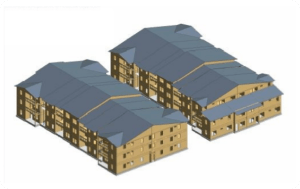
Once individual discipline models are complete, they are combined into a single federated model.
This integrated model allows all systems to be viewed together.
By visualizing the building in 3D, teams can better understand how systems interact within the available space.
Architects can confirm that design intent remains intact. Contractors can assess whether systems are practical to install.
For developers and investors, this stage provides valuable insight into potential construction risks.
Running MEP Clash Detection
Clash detection is one of the most powerful features of BIM.
Specialized software scans the federated model and automatically identifies conflicts between systems.
These conflicts are categorized into different types.
Hard Clashes
Hard clashes occur when two elements occupy the same physical space.
For example, a duct running directly through a structural beam.
Soft Clashes
Soft clashes involve violations of clearance requirements.
Mechanical equipment often requires space for maintenance. If another system blocks that space, it becomes a soft clash.
Workflow Clashes
Workflow clashes occur when installation sequences conflict.
For instance, one system may block access needed to install another system.
Through MEP clash detection, teams can visualize these conflicts and prioritize solutions.
Coordination Meetings and Conflict Resolution
After clashes are detected, the project team reviews them in coordination meetings.
These meetings bring together key stakeholders such as:
- Architects
- MEP engineers
- Structural engineers
- BIM coordinators
- Contractors
During these sessions, each clash is reviewed and assigned a solution.
Possible solutions include:
- Rerouting ducts or pipes
- Adjusting ceiling spaces
- Moving equipment
locations - Modifying structural openings
This collaborative process ensures that all disciplines agree on the best solution.
For architects, this step is especially important. It helps protect architectural design while accommodating engineering requirements.
Updating the BIM Model
Once solutions are agreed upon, the BIM model is updated.
Engineers modify their systems based on coordination decisions.
Clash detection is then run again to confirm the issues are resolved.
This process continues until the model becomes fully coordinated.
The final coordinated model becomes the reference for construction.
Contractors can rely on this model to guide installation and reduce on-site conflicts.
Benefits of BIM MEP Coordination for Construction Projects
BIM coordination offers major advantages for every stakeholder involved in a project.
Reduced Construction Risk
Early clash detection minimizes the chances of unexpected problems during construction.
Developers benefit from improved cost predictability.
Faster Project Delivery
When systems are coordinated digitally, contractors spend less time resolving issues on site.
This keeps projects on schedule.
Improved Collaboration
BIM encourages collaboration between architects, engineers, and contractors.
Teams work within a shared digital environment rather than isolated design files.
Better Use of Building Space
Coordinated models allow engineers to optimize system layouts.
This helps maximize ceiling space and improve building efficiency.
Higher Construction Quality
With a coordinated model guiding installation, systems are installed more accurately.
This leads to fewer field adjustments and better final outcomes.
Why Developers and Contractors Rely on BIM Coordination
For developers and contractors, BIM coordination provides a powerful risk management tool.
Large construction projects involve dozens of trades and hundreds of building systems.
Without proper coordination, managing these interactions becomes extremely difficult.
BIM models create a clear digital roadmap for construction.
Contractors can plan installation sequences and prefabrication strategies with confidence.
Developers benefit from improved project transparency and better control over budgets and schedules.
For property owners and investors, this translates into reduced project uncertainty and better long-term building performance.
The Growing Role of BIM in Modern Construction
The construction industry is rapidly moving toward digital project delivery.
Traditional 2D drawings are no longer sufficient for managing complex building systems.
BIM provides a smarter approach.
Through BIM coordination in construction, teams can visualize buildings before they are built.
They can simulate system interactions, detect design conflicts, and optimize building performance.
As projects become larger and more complex, the importance of BIM coordination will continue to grow.
Architects can protect design intent. Contractors can build more efficiently. Developers can reduce financial risk.
Best Practices for Successful BIM MEP Coordination
Effective coordination requires both technology and strong collaboration.
Here are some proven best practices used by leading BIM teams.
Start Coordination Early
Early coordination allows teams to resolve conflicts before designs become finalized.
This reduces the need for major redesign later in the project.
Establish Clear BIM Standards
Standard modeling practices ensure consistency across disciplines.
This improves model accuracy and coordination efficiency.
Maintain Regular Coordination Meetings
Frequent coordination sessions help teams address issues quickly.
Communication remains clear throughout the design process.
Use Experienced BIM Coordinators
Skilled BIM coordinators play a key role in managing models and resolving conflicts.
Their expertise helps streamline the coordination process.
Leverage Advanced BIM Tools
Modern BIM software includes powerful clash detection and reporting tools.
These tools help identify conflicts quickly and reduce manual effort.
Conclusion
As construction projects become more complex, coordination between building systems becomes increasingly important.
BIM MEP coordination allows engineers, architects, and contractors to detect conflicts early and resolve them before construction begins.
Through effective MEP clash detection and structured collaboration, project teams can reduce costly rework, improve construction efficiency, and protect project budgets.
For architects, developers, contractors, property owners, investors, and builders, adopting BIM coordination is no longer optional. It is an essential part of delivering successful modern construction projects.
By implementing a strong MEP coordination process in BIM, project teams can improve design quality, reduce risk, and ensure smoother construction from start to finish.